
 English
 Español
 Portugues
 Pусский
 Deutsch
 日本語
日本語 한국어
한국어 العربية
 Italiano
 Nederlands
 Svenska
 Polski
 ไทย
ไทย Türk dili
 Indonesia
 Tiếng Việt
 čeština
 Română
 Suomalainen

When a machine depends on one small component to move, turn, stop, or repeat the same action thousands of times, that component cannot simply be “close enough.” A small dimensional error can affect assembly, movement, timing, vibration, and even the service life of the complete machine. This is exactly where our Custom Precision Parts Manufacturing Services come in.
At Dongguan Jifan Precision Machinery Co., Ltd., I work with customers who need more than a standard off-the-shelf part. We manufacture custom Cams, Cam Mechanisms, plate cams, conjugate cams, eccentric shafts, crankshafts, and other precision mechanical components according to drawings, specifications, equipment requirements, and actual application conditions.
We are based in Dongguan, China, and our work is closely connected with the local precision manufacturing industry. Over the years, we have developed strong experience in cam design, Custom Cam Machining, irregular cam grinding, Profile Grinding, shaft machining, and other precision manufacturing processes. More than 1,000 customers have trusted our products and services, which gives us a practical understanding of the problems engineers and purchasing teams face when sourcing custom parts.
I do not see precision machining as simply putting a metal block into a machine and cutting it into shape. A good part starts with understanding what the part actually needs to do. We look at dimensions, material, working conditions, movement, mating components, production quantity, and the customer's equipment before deciding how the part should be manufactured.
That approach is especially useful for parts with unusual profiles, special movement requirements, eccentric geometry, or tight dimensional relationships. Instead of forcing a standard component into a non-standard application, we build the component around the application.
1. What Are Custom Precision Parts Manufacturing Services?
In simple terms, Custom Precision Parts Manufacturing Services means producing mechanical components specifically for a customer's machine, assembly, or production system. The customer may provide a finished engineering drawing, a sample part, a set of dimensions, or equipment requirements. We then turn that information into a manufacturable precision component.
The difference between Custom Manufacturing and standard parts is easy to understand. A standard part is normally designed to fit a common range of applications. A custom precision part is designed around a specific need. Its dimensions, shape, hole positions, surface condition, profile, material, and functional features can all be determined by the application.
Our main products include custom cams, cam mechanisms, plate cams, conjugate cams, eccentric shafts, crankshafts, and other custom precision parts. We also provide Machining Services for customers who already have their own component designs.
| Manufacturing Requirement | Standard Part | Custom Precision Part | Typical Reason for Customization |
|---|---|---|---|
| Dimensions | Predefined | Specified by customer | Limited installation space or special equipment |
| Shape | Standard geometry | Application-specific geometry | Special movement or mechanical layout |
| Material | Limited choices | Selected according to application | Load, wear, environment, or production requirements |
| Production Quantity | Usually mass-produced | Prototype, small batch, or repeat production | Different project and production needs |
| Design Input | Catalog specification | Drawing, sample, specification, or equipment requirement | Non-standard machinery or automation |
Source: Comparison prepared from common industrial manufacturing practices and the scope of general dimensional tolerancing described by ISO 2768. ISO states that general tolerances can simplify drawing indications for workpieces produced by metal removal or sheet-metal forming. :contentReference[oaicite:1]{index=1}
For us, customization does not mean making a completely different process every time. It means selecting the right combination of design, machining, inspection, and production methods for a particular component.
2. How We Manufacture a Custom Precision Part
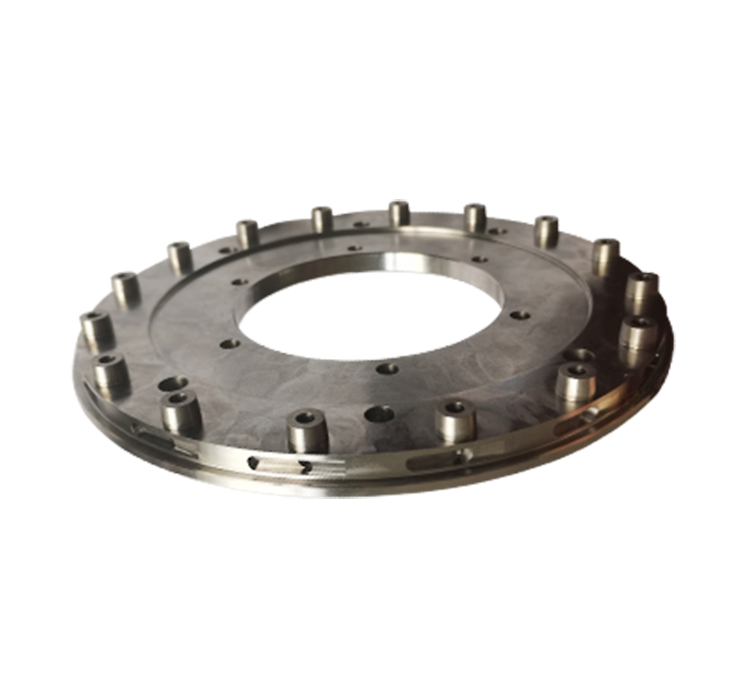
One question customers often ask is: “How does my drawing become a finished component?” The answer is a step-by-step process. The exact route changes from one product to another, but we normally begin with technical review and end with dimensional inspection and final verification.
Step 1: Review the Drawing or Requirements
Before production starts, I first need to understand what the part is supposed to do. A drawing may contain dimensions, tolerances, material information, surface requirements, hole patterns, profiles, and other technical notes. If the customer provides equipment requirements instead of a complete drawing, we use those requirements to understand the component's intended function.
This stage is important for custom cam machining because a cam is not simply a round or flat metal component. Its profile controls movement. The relationship between the cam profile, follower, shaft, rotation, stroke, and timing can directly affect the machine's operation.
Step 2: Select a Manufacturing Route
After understanding the component, we determine how it should be machined. Depending on the design, the manufacturing route may involve turning, milling, drilling, grinding, profile grinding, or a combination of several operations.
For example, a shaft may require turning for its main diameter, drilling for holes, milling for keyways or flat sections, and grinding for selected functional surfaces. A custom cam may require rough machining followed by profile grinding to achieve the required working shape.
Step 3: Rough Machining
Rough machining removes most of the unnecessary material and creates the basic shape. At this stage, the focus is on establishing the main geometry while leaving suitable material for later finishing operations.
This may sound simple, but good rough machining matters. If too much material is removed, there may not be enough allowance for finishing. If the process creates unnecessary distortion or poor reference surfaces, later operations become more difficult.
Step 4: Precision Machining and Grinding
After the basic shape has been created, we move to more controlled machining operations. Depending on the component, this can include precision turning, milling, profile grinding, or irregular cam grinding.
Grinding is particularly useful when a functional surface or profile requires controlled finishing. For custom cams, the profile itself is often the most important feature because it determines how the follower moves during operation.
Step 5: Dimensional Inspection
Once machining is complete, the finished part is checked against the agreed specifications. We inspect dimensions and relevant features before final verification and delivery.
We do not treat inspection as a separate activity that only happens at the end. The production process itself needs to be controlled so that problems can be identified before they become expensive downstream problems.
3. Main Types of Custom Precision Parts We Produce
Our Custom Precision Parts Manufacturing Services cover several types of mechanical components. Although these components look different, they have one thing in common: they need to work correctly as part of a larger machine.
Custom Cams
Custom cams are one of our core products. A cam can be designed to convert rotary motion into a controlled movement. The exact movement depends on the cam profile and the follower arrangement.
We manufacture custom cams according to customer drawings, movement requirements, equipment dimensions, and application conditions. This allows customers to obtain a cam that matches their existing mechanism instead of changing the entire machine around a standard cam.
Plate Cams
Plate cams are widely used in mechanical automation because their profile can control follower movement during rotation. The shape of the working profile is critical to machine performance.
When manufacturing a plate cam, we pay attention not only to the overall dimensions but also to the working profile, mounting features, center position, and relationship between the cam and the rest of the mechanism.
Conjugate Cams
Conjugate cams are used when two coordinated cam surfaces are required to control a follower or mechanical movement. Their geometry needs to be matched carefully so that the components work together during rotation.
This is an area where custom manufacturing becomes especially useful. The component cannot be judged by one dimension alone. Several geometric relationships need to work together.
Eccentric Shafts
Eccentric shafts have an offset center or eccentric section that creates a controlled movement during rotation. We manufacture eccentric shafts according to the required dimensions and application specifications.
Depending on the design, the shaft may include different diameters, shoulders, holes, keyways, or other machining features. The important point is to maintain the required relationship between these features.
Crankshafts
Crankshafts convert rotational movement into reciprocating movement or perform the reverse function in certain mechanical systems. Their geometry can be more complicated than that of a simple shaft.
For custom crankshaft machining, we focus on the drawing requirements, journal dimensions, offset geometry, connection features, and final inspection requirements provided by the customer.
Other Custom Precision Components
In addition to cams and shafts, we manufacture other custom mechanical components when customers provide drawings or clear specifications. This can include components used in automation equipment, production machinery, packaging machinery, and other industrial systems.
4. Why Profile Grinding Matters for Custom Cams
Among all the processes involved in Custom Cam Manufacturing, profile grinding deserves special attention. The reason is straightforward: the profile is the part of the cam that directly controls the movement of the follower.
Imagine a simple wheel pushing a mechanical arm. If the wheel is perfectly round, the arm may move in a very basic way. Change the shape of the wheel, however, and the movement changes. The arm may move quickly, slowly, pause, return, or follow a more complicated motion pattern.
A cam works on this basic idea, but with much greater control. The profile can be designed around the required motion cycle. That is why custom cam design and profile grinding are closely connected.
During cam production, the manufacturing process needs to reproduce the required profile accurately. A small change in the profile can influence the movement of the follower. For automated machinery, this may affect timing, positioning, speed changes, or repeatability.
We therefore treat the cam profile as a functional surface rather than simply an external shape. The goal is not to make the part look correct. The goal is to make it work correctly inside the customer's machine.
| Cam Manufacturing Stage | Main Purpose | What We Check |
|---|---|---|
| Drawing and motion review | Understand the required movement | Dimensions, profile information, mounting and application requirements |
| Rough machining | Create the basic cam geometry | Material allowance and basic dimensions |
| Precision machining | Prepare functional surfaces | Critical dimensions and feature relationships |
| Profile grinding | Finish the working profile | Profile geometry and agreed specifications |
| Final inspection | Verify the finished component | Dimensions and relevant quality requirements |
Source: Process comparison prepared from standard precision-machining practice and the role of dimensional tolerancing in machined workpieces. ISO 2768 provides general tolerance principles for workpieces produced by metal removal and explains the purpose of general tolerances in simplifying drawing indications. :contentReference[oaicite:2]{index=2}
5. Key Features of Our Custom Precision Parts Manufacturing Services
Made Around Your Equipment
We do not assume that every customer uses the same machine layout. Your available installation space, shaft arrangement, mounting position, motion cycle, and working environment may all be different. We therefore manufacture components based on your actual requirements.
Drawing-Based Manufacturing
If you already have an engineering drawing, we can manufacture the component according to the agreed specifications. This is useful for replacement parts, machine upgrades, automation projects, and ongoing production.
Custom Cam Design Support
Some customers know exactly what cam they need. Others know what the machine needs to do but do not yet have a finished cam drawing. Our experience with cam mechanisms allows us to discuss the mechanical requirements and develop a suitable manufacturing approach.
Multiple Machining Processes
Precision parts often cannot be produced efficiently through one machining process alone. Turning, milling, drilling, grinding, and profile grinding may all have a role depending on the component.
Dimensional Inspection Before Delivery
Before delivery, products go through machining, dimensional inspection, quality checking, and final verification according to the agreed specifications. This gives customers a clear quality checkpoint before the parts enter their production line.
Flexible Production Quantities
The production cycle depends on product complexity, material, quantity, and customization requirements. This means the same manufacturing route is not automatically applied to every order. We evaluate the actual project before confirming production arrangements.
6. Manufacturing Quality: Why Details Matter
Precision manufacturing is often discussed using words like tolerance, accuracy, repeatability, surface finish, and dimensional control. These terms may sound technical, but the basic idea is simple: the part needs to match the requirements that make it work inside the machine.
For example, imagine a shaft that needs to fit into a bearing. If the shaft diameter is not suitable for the bearing, the assembly may be too tight or too loose. If the shaft has multiple stepped sections, the relationship between those sections also matters.
The same principle applies to cams. The outer profile is not decorative. It determines movement. If the profile does not match the intended design, the mechanical action can change.
This is why we pay attention to the customer's drawing and agreed specifications rather than promising one universal machining number for every product. Different parts have different functional requirements.
ISO 2768 is a useful reference in this area because it defines general tolerance classes for linear and angular dimensions when individual tolerances are not separately indicated. The standard is intended to simplify drawing indications for suitable machined workpieces. :contentReference[oaicite:3]{index=3}
In actual production, however, we do not simply assume that a general tolerance is suitable for every feature. If a dimension is functionally important, the customer's drawing or agreed specification should define the required tolerance. This is a practical point that can prevent unnecessary cost and confusion.
| Specification Approach | Suitable Use | Our Practical View |
|---|---|---|
| Individual tolerance on drawing | Critical functional dimensions | Preferred when a feature directly affects assembly or movement |
| General tolerance | Non-critical dimensions where permitted | Can simplify drawings and manufacturing communication |
| Special inspection requirement | Critical geometry or profiles | Should be agreed before production |
| Sample-based reference | Replacement or reverse-engineered components | Useful when original drawings are unavailable |
Source: ISO 2768 official information. ISO describes general tolerances as a way to simplify drawing indications and specifies tolerance classes for applicable linear and angular dimensions. :contentReference[oaicite:4]{index=4}
7. Industries We Serve
Our custom precision components are used in different industrial environments. We do not limit our work to one machine type because the same basic mechanical principles appear across many production systems.
Daily Chemical Production
Production equipment in the daily chemical industry often includes automated feeding, filling, conveying, positioning, and packaging processes. Custom cams and precision mechanical components can be used where controlled repetitive movement is required.
Biopharmaceutical Equipment
Equipment used in biopharmaceutical production can include automated handling and processing systems. Mechanical components need to fit the equipment design and operate reliably during repeated production cycles.
Food Processing
Food processing equipment often combines conveyors, feeders, positioning mechanisms, filling systems, and packaging machines. Custom precision parts can be designed around the motion and space requirements of these systems.
Electronics Manufacturing
Electronics production frequently requires accurate positioning and repeatable movement. Precision shafts, cams, and other custom components can support automated equipment where standard parts do not provide the required configuration.
Plastics and Hardware
Plastics and hardware manufacturing equipment can involve forming, feeding, sorting, assembly, and packaging. Custom mechanical components help machine builders develop equipment around specific production steps.
Printing
Printing machinery relies heavily on synchronized movement and controlled mechanical timing. Precision components can play an important role in positioning and transferring motion between machine sections.
Beverage Production
Beverage production lines often use automated filling, capping, conveying, labeling, and packaging equipment. Custom parts can be manufactured for individual mechanisms according to the machine builder's drawings and specifications.
Across these industries, our goal remains the same: provide a component that fits the customer's machine, meets the agreed requirements, and can be used reliably in the intended application.
8. Why Work With Dongguan Jifan Precision Machinery?
There are many machining companies available in the market. From my perspective, choosing a supplier should not be based only on whether the supplier can make a metal part. The more important question is whether the supplier understands why the part needs to be made in a particular way.
Our core experience is closely related to cams, cam mechanisms, shafts, grinding, and custom precision mechanical components. This gives us a practical advantage when a project involves unusual movement, irregular profiles, eccentric geometry, or other non-standard requirements.
Strong Focus on Cam Mechanisms
Cam mechanisms are a specialized area of mechanical engineering. We have developed experience in cam design, custom cam machining, plate cams, conjugate cams, and profile grinding. This means customers can discuss not only the finished part but also the mechanical purpose behind it.
R&D and Customization
Our company has strong R&D capabilities and provides customized automation solutions for different industries. We are comfortable working with customer drawings, specifications, and equipment requirements rather than limiting customers to a fixed catalog.
Experience With Different Industrial Applications
Our products have been used by more than 1,000 customers. Every application teaches us something about real-world production requirements. A part that looks simple on a drawing may face very different working conditions once it is installed in a production machine.
Practical Communication
We try to keep communication straightforward. Customers need clear information about specifications, production arrangements, inspection, packaging, delivery, and payment terms. The production cycle is discussed according to the actual complexity, material, quantity, and customization requirements of the order.
Protection During Transportation
Precision components should not be treated casually after machining. Standard protective packaging is used to reduce the risk of damage during handling and transportation. For special requirements, customized packaging can also be arranged.
9. Quality Management and Inspection Approach
Quality is not only about checking a finished component. A reliable manufacturing process starts with understanding the customer's requirements, planning the production route, controlling machining operations, checking important dimensions, and verifying the final product.
ISO 9001 provides an internationally recognized framework for quality management systems. ISO explains that the standard addresses processes such as planning, operation, performance evaluation, and continual improvement, with a focus on consistently meeting customer and applicable requirements. :contentReference[oaicite:5]{index=5}
We apply the same basic manufacturing mindset to our own work: requirements need to be understood before production, manufacturing needs to follow the agreed specifications, and finished components need to be checked before delivery.
Our normal quality flow includes machining, dimensional inspection, quality checking, and final verification. For components with special requirements, inspection points can be discussed before production so both sides understand what needs to be checked.
This is especially important for custom parts because there is no single “standard size” that can be used as a reference. The customer's drawing, specifications, and equipment requirements become the foundation for production.
10. From Customer Drawing to Finished Component
If you have a finished drawing, the process is relatively straightforward. You send us the drawing and relevant specifications, and we review the part before confirming the manufacturing arrangement.
If the drawing is incomplete, that does not necessarily mean the project has to stop. You can provide the dimensions you have, a sample component, equipment information, or a description of the required movement. The more useful information we receive, the easier it is to understand the actual requirement.
For cam-related projects, useful information may include cam type, rotation direction, follower arrangement, movement requirements, installation dimensions, working cycle, material, and quantity. For shaft projects, dimensions, bearing positions, keyways, holes, eccentricity, and mating components can be important.
We then review the available information and determine whether additional clarification is needed before production.
11. Production, Payment, Packaging, and Delivery
We understand that manufacturing is only one part of an international B2B order. The customer also needs to know how the order will be handled after production.
The production cycle depends on product complexity, material, quantity, and customization requirements. We therefore avoid giving one fixed production time for every type of custom precision part. A simple component and a complex cam profile obviously require different levels of processing.
Payment terms are arranged according to the contract and can depend on order quantity, production requirements, and project conditions. The exact terms are confirmed before the order is placed.
For transportation, products can be shipped by express, air freight, sea freight, or another suitable method depending on the destination and order size. Smaller urgent orders may require a different logistics method from larger production shipments.
Packaging is also considered according to the product. Standard protective packaging is used to reduce the risk of damage during handling and transportation. If the customer has special packaging requirements, we can discuss customized packaging before shipment.
12. Frequently Asked Questions About Custom Precision Parts Manufacturing Services
Q1: What information do you need to manufacture a custom precision part?
Ideally, we need a technical drawing with dimensions, tolerances, material, surface requirements, and other relevant specifications. If a complete drawing is not available, you can provide a sample, dimensions, photos for reference, or equipment requirements. For cam projects, movement and installation requirements are particularly useful.
Q2: Can you manufacture parts according to our drawings?
Yes. Our custom precision parts manufacturing service is based on customer drawings, specifications, and equipment requirements. We review the information before production and manufacture the component according to the agreed requirements.
Q3: Do you manufacture custom cams?
Yes. Custom cams are one of our main products. We provide custom cam machining, cam design, plate cams, conjugate cams, irregular cam grinding, and profile grinding services for automation and production equipment.
Q4: What is the difference between a plate cam and a conjugate cam?
A plate cam generally uses a shaped profile on a rotating plate to control follower movement. A conjugate cam arrangement uses coordinated cam surfaces to control movement with a matched mechanical relationship. The appropriate design depends on the required movement and machine structure.
Q5: Can you manufacture eccentric shafts?
Yes. We manufacture Custom Eccentric Shafts according to customer drawings and specifications. The required eccentricity, shaft dimensions, holes, keyways, shoulders, and other features need to be defined according to the actual application.
Q6: Do you provide profile grinding?
Yes. Profile grinding is one of our manufacturing capabilities, particularly for components where the working profile is functionally important. The actual grinding process and inspection requirements depend on the component design and agreed specifications.
Q7: Can you produce small quantities?
Production arrangements depend on the part, material, complexity, and quantity. We provide customized manufacturing rather than requiring every customer to purchase a fixed standard quantity. Please provide the drawing and required quantity so the production requirements can be reviewed.
Q8: How do you check finished precision parts?
Finished products undergo dimensional inspection, quality checking, and final verification according to the agreed specifications. The specific inspection points depend on the drawing and the functional requirements of the component.
Q9: How long does production take?
There is no single production cycle for every custom precision part. The actual time depends on product complexity, material, order quantity, machining requirements, and customization level. We confirm the production arrangement after reviewing the project details.
Q10: How are the parts shipped?
We can arrange express, air freight, sea freight, or other suitable transportation methods depending on destination and order size. The most suitable option can be discussed according to delivery requirements and shipment volume.
Q11: Do you offer customized packaging?
Yes. Standard protective packaging is used for normal orders, while customized packaging can be discussed for products with special transportation or handling requirements.
Q12: What industries use your custom precision components?
Our components are used in daily chemical, biopharmaceutical, food processing, electronics, plastics and hardware, printing, beverage, and other industrial applications. The exact component depends on the machine and production process.
13. What Makes a Good Custom Precision Parts Supplier?
In my experience, the best supplier is not necessarily the company that gives the lowest price on the first quotation. A good supplier should understand the component, communicate clearly, control production, inspect the finished part, and provide practical support when something needs to be clarified.
This becomes even more important for custom precision parts manufacturing. When a component is made specifically for your machine, there may be no ready-made alternative if something is wrong. A small mistake can create additional work during assembly or delay an entire production project.
I therefore recommend looking at several factors when comparing suppliers: experience with similar components, understanding of the manufacturing process, ability to work from drawings, inspection procedures, communication, packaging, logistics, and after-sales support.
| Supplier Evaluation Point | Why It Matters | Questions to Ask |
|---|---|---|
| Technical experience | Helps identify practical manufacturing issues | Have you produced similar components? |
| Drawing understanding | Reduces misunderstandings before production | Can you review our drawing and requirements? |
| Machining capability | Determines whether the required geometry can be produced | Which machining and grinding processes are suitable? |
| Inspection | Confirms the finished part matches agreed requirements | Which dimensions and features are inspected? |
| Packaging and logistics | Protects finished components during transportation | How will the parts be packed and shipped? |
| Communication | Makes custom projects easier to manage | How are technical questions handled before production? |
Source: Practical supplier-evaluation framework prepared for custom industrial component procurement. The quality-management considerations are consistent with the process-oriented approach described by ISO 9001. :contentReference[oaicite:6]{index=6}
14. Choose Custom Manufacturing When the Application Is Not Standard
Standard parts are useful. They are easy to order, easy to replace, and often cost-effective. But they are not the right answer for every machine.
When your equipment has a special movement cycle, unusual installation space, non-standard shaft arrangement, custom cam profile, special mounting pattern, or other unique requirement, a custom component may be the more practical solution.
This is the main reason we provide Custom Precision Parts Manufacturing Services. We want to help customers build the component around the machine rather than redesigning the machine simply to accommodate a standard component.
Our work covers custom cams, cam mechanisms, plate cams, conjugate cams, eccentric shafts, crankshafts, profile grinding, irregular cam grinding, and other precision mechanical components. We can work from drawings, specifications, or equipment requirements and organize production according to the actual project.
If you are developing automation equipment, replacing a difficult-to-source mechanical component, improving an existing machine, or looking for a reliable supplier for repeat production, send us your drawing and requirements. We can review the project, discuss the manufacturing approach, and provide a practical solution based on the part you actually need.
At Dongguan Jifan Precision Machinery Co., Ltd., our focus is simple: make precision components that fit the machine, perform the required function, and give our customers a dependable manufacturing partner for future projects.
